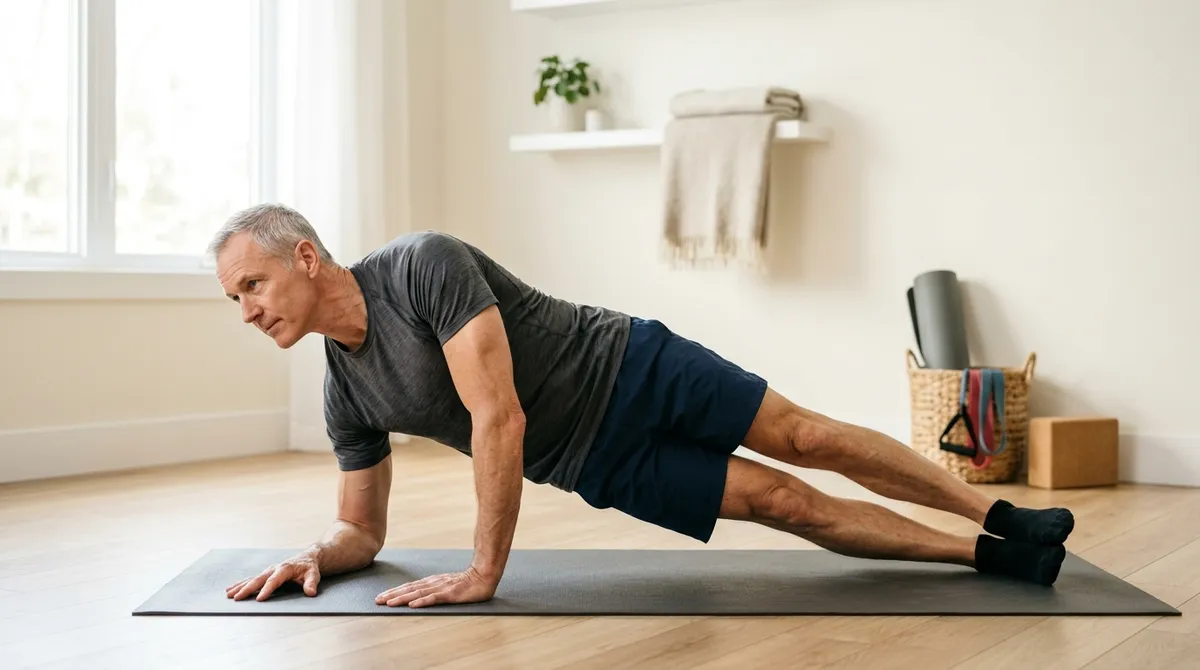
Building core strength is essential as we age, especially for men over 50 who want to maintain mobility, posture, and overall functional fitness. Forget traditional crunches; side planks are the way to go. In this article, you'll learn why side planks are invaluable, how to perform them correctly, and some variations to help you progress from beginner to advanced levels.
The Importance of Core Stability
As men enter their 50s, core stability becomes crucial. A strong core supports the spine, enhances balance, and makes everyday activities—like climbing stairs or playing golf—much easier. Unlike crunches, which focus primarily on the rectus abdominis, side planks activate the obliques and other stabilizing muscles, contributing to a balanced core.
Benefits of Side Planks
Here’s why side planks are particularly beneficial for men over 50:
- Spine Support: Side planks engage muscles that support the spine, reducing back pain often associated with aging.
- Improved Posture: Strengthening lateral core muscles can enhance your posture, making you look and feel better when standing or sitting.
- Functional Fitness: Side planks help improve your ability to perform daily movements, from carrying groceries to participating in sports.
Basic Form for Side Planks
To perform a side plank correctly, follow these steps:
- Starting Position: Lie on your side with your legs extended. Prop your upper body on your elbow, ensuring your elbow is directly under your shoulder.
- Lift Your Hips: Engage your core and lift your hips off the ground, forming a straight line from head to heels.
- Position Your Free Arm: Raise your free arm straight up to the ceiling, or place it on your hip for balance.
- Hold the Position: Keep your body straight, avoiding sag or arch in your hips. Engage your core throughout.
- Breathe: Hold for 15-30 seconds, focusing on steady breathing.
- Switch Sides: After holding, gently lower your body, switch sides, and repeat.
Common Mistakes to Avoid
- Letting Your Hips Drop: Maintain a straight line from head to heels.
- Overarching the Back: Keep your spine neutral and engage your core.
- Holding Your Breath: Remember to breathe; this helps maintain stability.
Modifications for Beginners
If you're starting, it’s okay to modify. Here are a couple of ways to make side planks easier:
- Knee Plank: Instead of stacking your feet, rest your lower knee on the ground while keeping your upper body in the side plank position.
- Wall Plank: Face a wall, place your feet a foot or two from the wall, and perform the side plank by pressing your body against the wall for support.
Progressing Your Side Plank
Once you feel comfortable with the basic side plank, you can try these variations to increase difficulty:
- Leg Lift: While in the side plank position, raise your top leg, holding it for several seconds before lowering.
- Rotation: Add a twist by bringing your top arm down to touch the ground and then lifting it back to the starting position.
- Weighted Side Plank: Try holding a light weight in your free hand for extra resistance.
A Simple 4-Week Progression Plan
You can follow this 4-week plan to help build your side plank strength:
- Week 1: 3 sets of 15 seconds, 3 days a week.
- Week 2: 3 sets of 20 seconds, 3 days a week.
- Week 3: 3 sets of 30 seconds, 3 days a week.
- Week 4: 3 sets of 45 seconds, 3 days a week.
This gradual increase will help you build strength over time without overstraining.
Final Thoughts
Side planks offer a multitude of benefits as you age, providing a better alternative to crunches for developing functional core strength. By incorporating this exercise into your routine, you can improve your posture, support your spine, and enhance your daily movements, ensuring a healthier lifestyle as you move into your later years.